

Published 25 September 2026
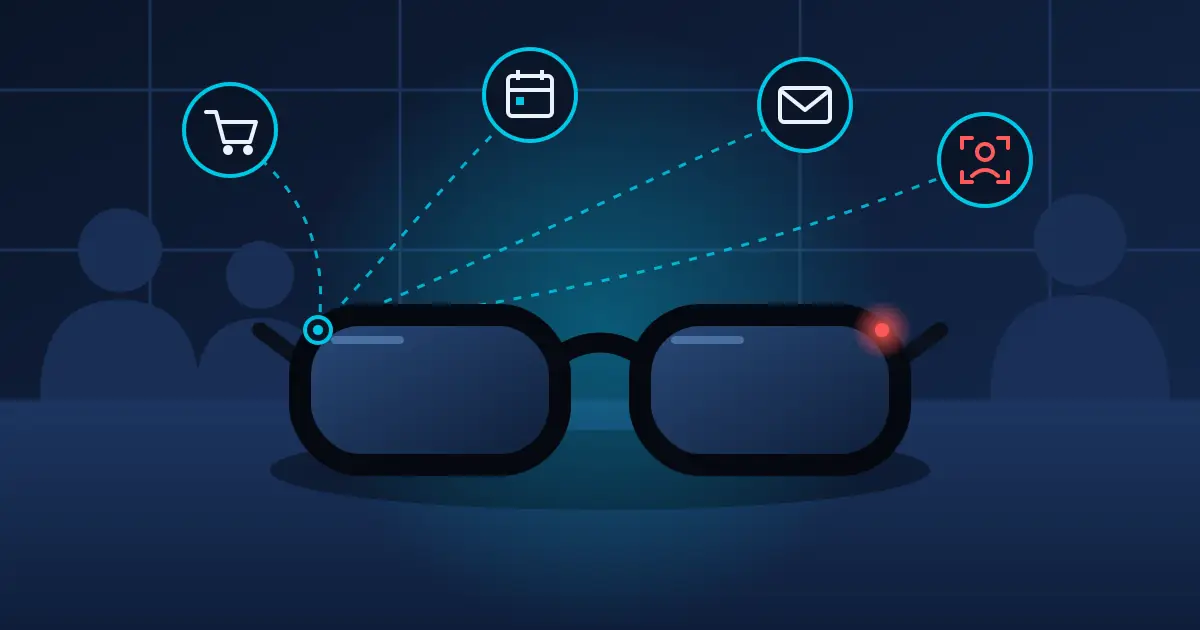
The short answer: this week Meta turned its smart glasses from a camera you wear into a front door for a personal AI agent. At Connect 2026 it announced that Muse, its agent that can shop, book, send email and work inside apps like Notion, GitHub and Box, is coming to its glasses, and that there will be more than 100 styles of AI glasses on sale by the end of the year. The same week, the Dutch privacy regulator warned that sharing footage from camera glasses breaks GDPR without everyone’s permission, and Meta pulled a satirist’s video that filmed its own staff with the glasses. AI glasses are about to walk into your office, your clinic and your client meetings, and most businesses have no rule for them. Here is what changed and the policy to put in place now.
What Meta announced at Connect 2026
Meta’s 23 September keynote put its Muse agent at the center of everything. Muse launched on 8 September as a personal AI agent that books travel, fills out forms and makes purchases. At Connect, Meta said it is bringing Muse to its AI glasses in the coming months, where users will be able to talk to it hands-free and let it work through the glasses’ camera view. Muse is also gaining an email address, computer-use features on Mac and new connectors for Walmart, Best Buy, Expedia, Instacart, Notion, GitHub and Box.
The hardware news widened the net:
- Ray-Ban Meta (Gen 3) keeps the camera, adds a slimmer design, longer battery life and an action button for instant access to Meta AI, plus a six-microphone array that Meta says removes more than 90% of background noise. It went on sale the day of the keynote.
- Ray-Ban Meta Audio is Meta’s first camera-free AI glasses, starting at $349 with pre-orders from 13 October. It is Meta’s answer to years of criticism about covert filming.
- Meta Ray-Ban Display, the $799 model with a heads-up screen, can now be ordered online in the US and is on sale in the UK and Canada, with Germany, France and Italy following on 13 October.
- Muse Charm, a palm-sized keychain device showing the agent’s avatar, is due in December, and Meta teased a “Private Processing” feature it says will keep user data away from the company.
Why this is a different risk from “someone might film me”
For three years, the worry about camera glasses was covert recording. That worry is still valid, but the agent adds three new problems that most workplace policies were never written for:
- Seeing becomes processing. A phone camera takes a picture when someone deliberately points it. An agent that works through the camera view is built to read and interpret what is in front of it: the customer record on a monitor, the pricing on a whiteboard, the patient name on a chart. Nobody has to press record for that information to reach a cloud model.
- Personal agents connect to work tools. Meta’s new connectors include Notion, GitHub and Box, which is where many companies keep documents, code and files. An employee’s personal agent, running on personal glasses, can end up holding a thread into company systems that IT never approved. That is shadow AI that you wear on your face.
- Audio-only is not privacy-free. Camera-free glasses solve the filming problem, not the listening problem. A six-microphone array designed to isolate voices in noisy rooms is exactly what makes a conversation easy to capture and transcribe. In all-party consent states, including Florida, where we are based, recording a private conversation generally requires everyone’s consent.
We have already written about how personal AI agents turned wallets into an attack surface. Glasses extend the same agent into physical spaces, which means your office, your front desk and your conference room are now part of that surface too.
The backlash arrived the same week
The timing was striking. On 22 September, the day before Connect, the Dutch Data Protection Authority (AP) warned that sharing, publishing or reusing photos and videos from camera glasses in which people are recognizable is not allowed under GDPR without permission from everyone shown. It went further than most regulators so far: it warned against using the glasses in sensitive places such as hospitals, courthouses and religious buildings, and advised those organizations to ban them on their premises. The Dutch consumer group Consumentenbond had already warned that the recording indicator light can be manipulated or covered.
On 24 September, Instagram removed a video by Dutch satirist Roel Maalderink, made with digital rights group Bits of Freedom, in which he wore the glasses and questioned Meta employees about being recorded. Meta cited bullying and harassment. The video remains on YouTube, and it made the point better than any press release: even the people building the glasses did not enjoy being filmed by them.
In the US, the rules are a patchwork. New York’s state court system banned smart glasses and other wearables that can record audio or video from 1 July 2026, with an accommodation process for people with disabilities. California’s SB 1130, as amended on 13 August, would prohibit using a wearable recording device to capture people in areas of a business where they have a reasonable expectation of privacy without their explicit consent. Illinois’ Biometric Information Privacy Act already requires written notice and consent before collecting facial geometry, with a private right of action, which matters because WIRED reported in June on an unreleased Meta feature designed to recognize people seen through the glasses’ camera. Meanwhile, sales are growing fast: more than 13 million smart glasses are forecast to sell worldwide this year.
Why a blanket ban is the wrong first move
The instinct is to ban them outright. Resist it, at least as your only answer. Employment lawyers warn that overly broad bans on all workplace recording can create legal and employee-relations risk, for example where employees may be documenting unsafe conditions. Glasses are also prescription eyewear for many people, and some models now offer hearing assistance: Meta announced FDA-cleared hearing enhancement for adults with mild to moderate hearing loss on supported glasses. A ban that forces someone to choose between seeing, hearing and doing their job is a disability accommodation problem waiting to happen.
The better model is the one courts and privacy regulators are already using: control by place and by moment, not by device.
Eight steps to take before the glasses show up
- Write a wearables clause into your acceptable use policy. Name smart glasses, pendants and other recording-capable wearables explicitly. A general “no recording” line written for phones will not be read as covering eyewear.
- Map your red zones. List the rooms and moments where recording-capable glasses are not allowed: server rooms, areas with visible patient or client data, HR, legal and board meetings. Post clear signs, but do not rely on signs alone.
- Set an announce-and-disable rule for meetings. Anyone wearing AI glasses says so at the start, turns off the camera and agent, and removes them if anyone present asks. Default to no recording whenever a client or vendor objects.
- Block personal agents from company systems. Review which third-party apps can connect to your Notion, GitHub, Box, Google or Microsoft tenants. Require admin approval for new OAuth connections so an employee’s personal agent cannot quietly link to company data. Our AI agent security guide covers the ownership side.
- Clean your sight lines. Screens facing corridors and whiteboards left full after meetings were always a risk. An agent that can read the camera view makes them a data leak. Use privacy filters, auto-lock screens and a wipe-the-board habit.
- Brief your front desk. Give reception a short script for visitors wearing camera glasses, and a person to call if someone appears to be recording in a restricted area.
- Build the accommodation path now. Decide how you will handle prescription and hearing-assist glasses before an employee asks. Camera-free models or a non-recording backup pair can solve most cases.
- Check the law where you operate. All-party consent states, biometric laws like Illinois BIPA, HIPAA obligations in healthcare, and GDPR if you have European staff or customers can all apply. Have counsel review the policy before you roll it out.
Frequently asked questions
Can a business ban smart glasses in the workplace?
Generally, a business can restrict recording-capable devices on its premises and in specific areas, and courts in New York and the UK already do. But a total ban can conflict with employee rights and disability accommodation duties, especially for prescription or hearing-assist eyewear. A zone-based policy with an accommodation process is usually safer than a blanket ban. Review it with an employment lawyer.
Are camera-free AI glasses safe to allow?
They remove the photo and video risk, but not the audio risk. Microphones built to pick out voices in noisy rooms can capture and transcribe conversations, and an AI agent can act on what it hears. Treat audio-only glasses like any other device that can record a conversation, especially in all-party consent states.
How can I tell if someone’s glasses are recording?
Most camera glasses show a small indicator light while recording, but Dutch consumer watchdogs have warned the light can be covered or manipulated. Do not rely on spotting it. In meetings and sensitive areas, ask people to announce AI glasses and remove them when requested.
What makes Meta’s Muse on glasses different from earlier smart glasses?
Earlier glasses mainly took photos, played audio and answered questions. Muse is an agent that can take actions: send email, make purchases and work with connected apps such as Notion, GitHub and Box. Bringing it to glasses links what the wearer sees and hears directly to those actions, which is why policies need to cover the agent as well as the camera.
Get your wearables policy in place
Delana Technologies helps businesses write practical AI and wearables policies, lock down which apps and agents can connect to company systems, and harden sensitive areas with Zero Trust controls. Call 239.414.5126 or contact us to get started.
Sources: Meta Newsroom, “The Biggest News From Connect 2026”; Meta, Everything We Announced at Connect 2026; Engadget; Next Reality; The AI Insider; Gizbot; DutchNews, 22 September 2026; DutchNews, 24 September 2026; Potomac Law Group; Startland News / Polsinelli; HR Grapevine; IAPP; GRIP. This article is general information, not legal advice. Graphics: Delana Technologies.